Luxor
Luxor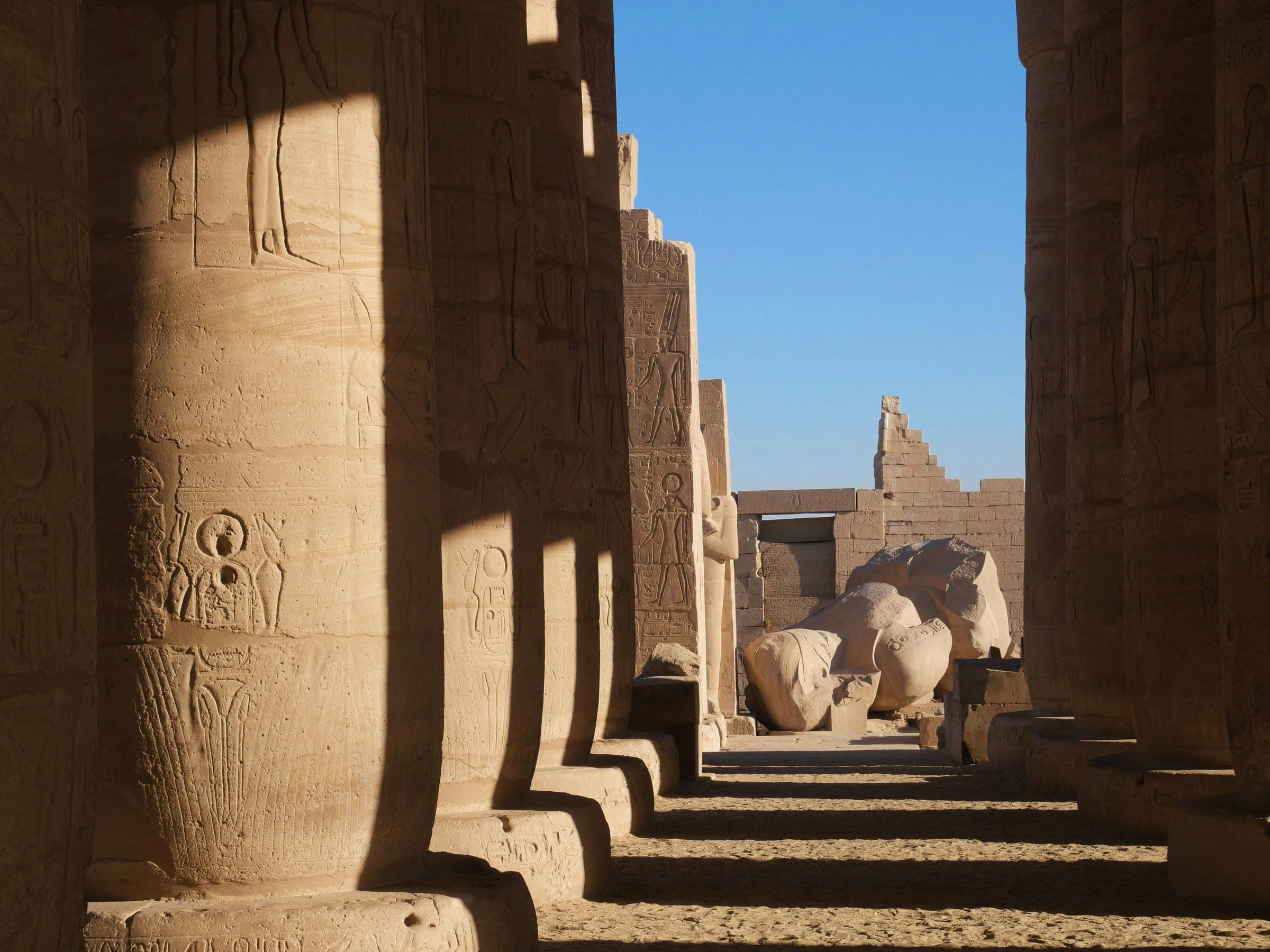
The greatest pharaoh, face-down in the sand.
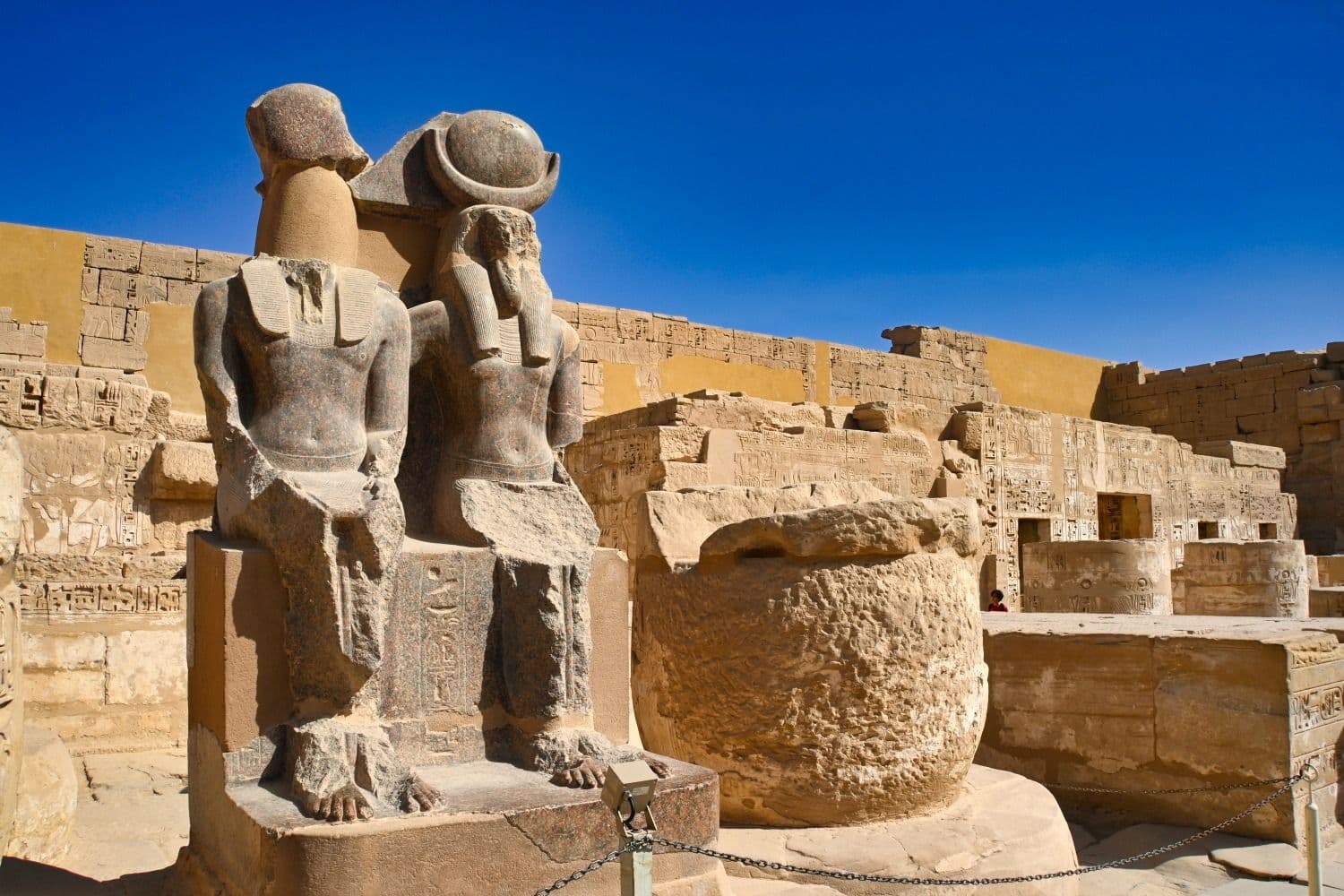
Ramesses II ruled for sixty-six years, fathered a hundred children, plastered his name across every temple in Egypt, and called himself the king of kings. And then he built himself a memorial temple on the West Bank, crowned by a seated statue of himself so vast it weighed a thousand tonnes — a monument, he was certain, to his own eternity. Today that statue lies broken across the ground, its face in the dust, its torso split from its legs. Time won. It always does.
That toppled giant is the "colossal wreck" a young English poet named Shelley wrote about in Ozymandias, the most famous meditation on the vanity of power ever written — and standing beside the real thing, in the silence of the West Bank, the poem lands with a force no classroom ever gave it.
A temple that tells its story
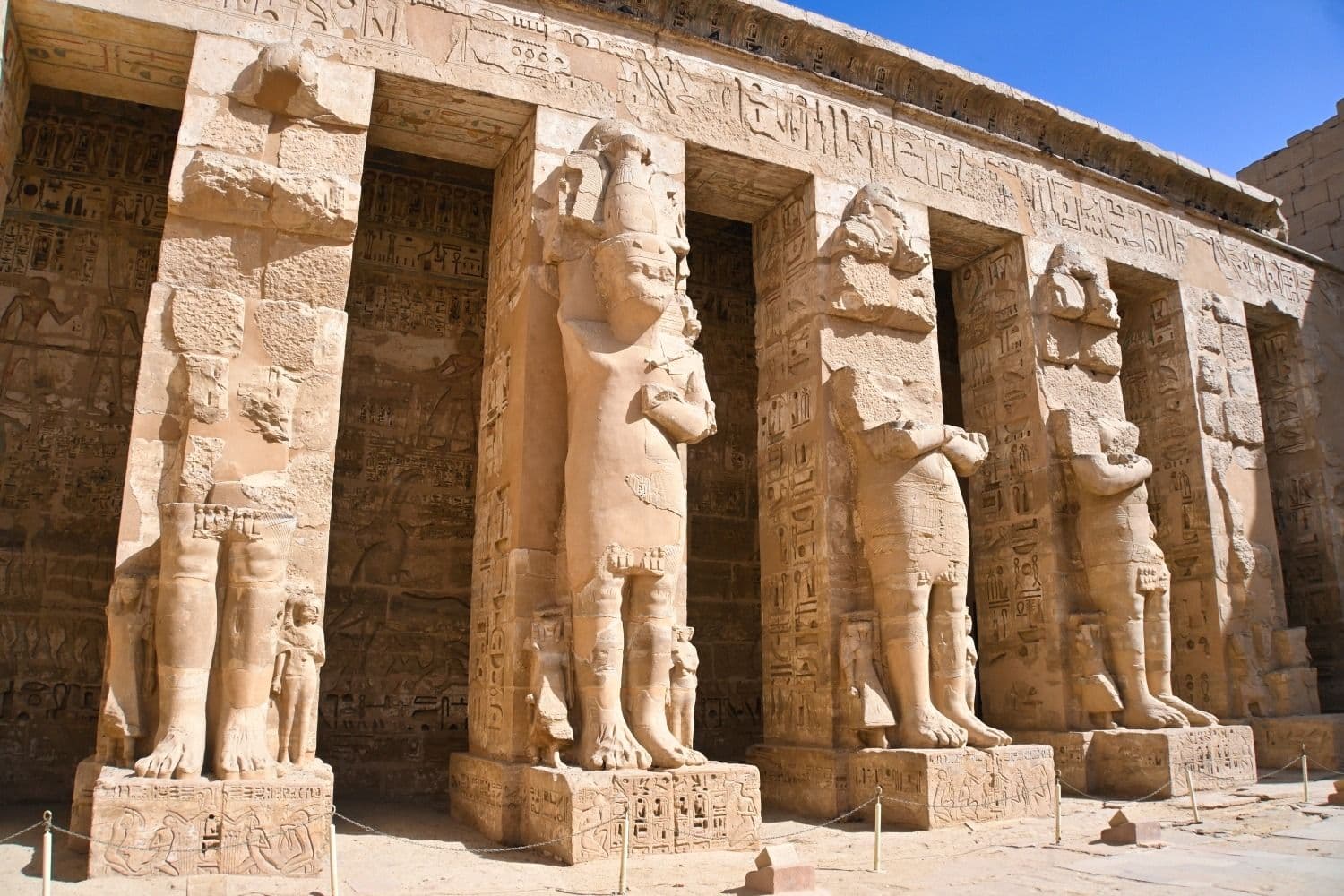
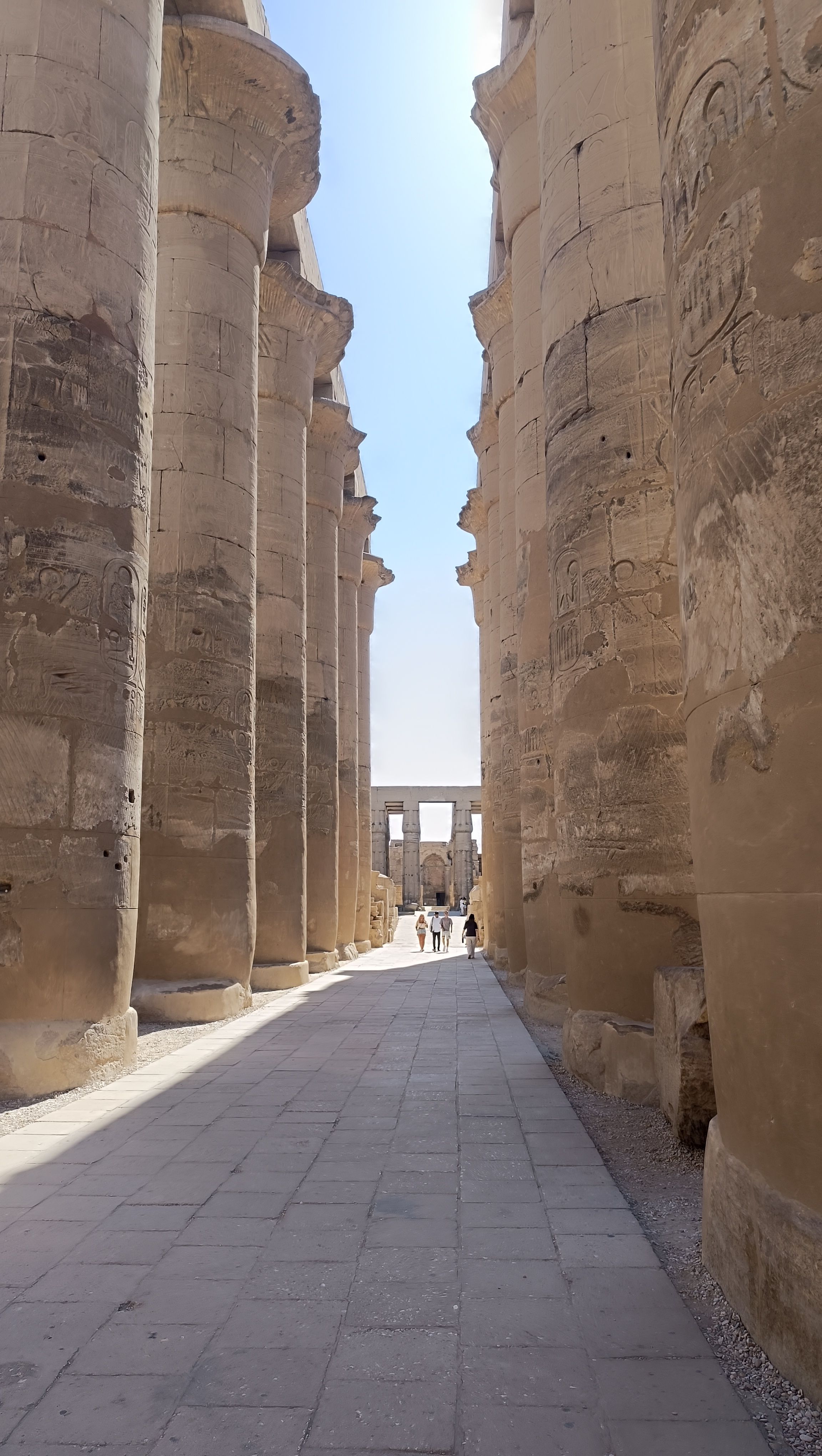
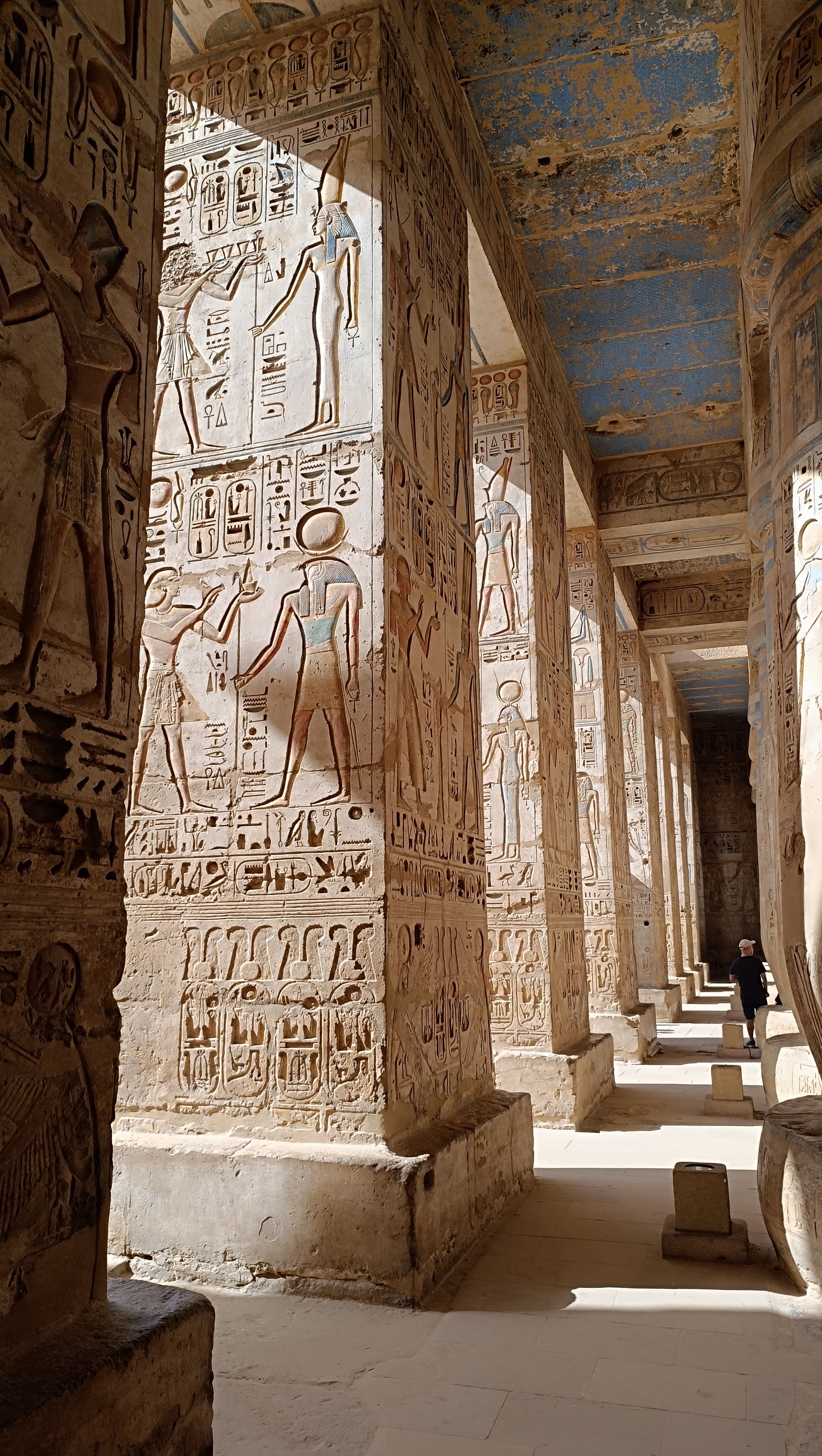
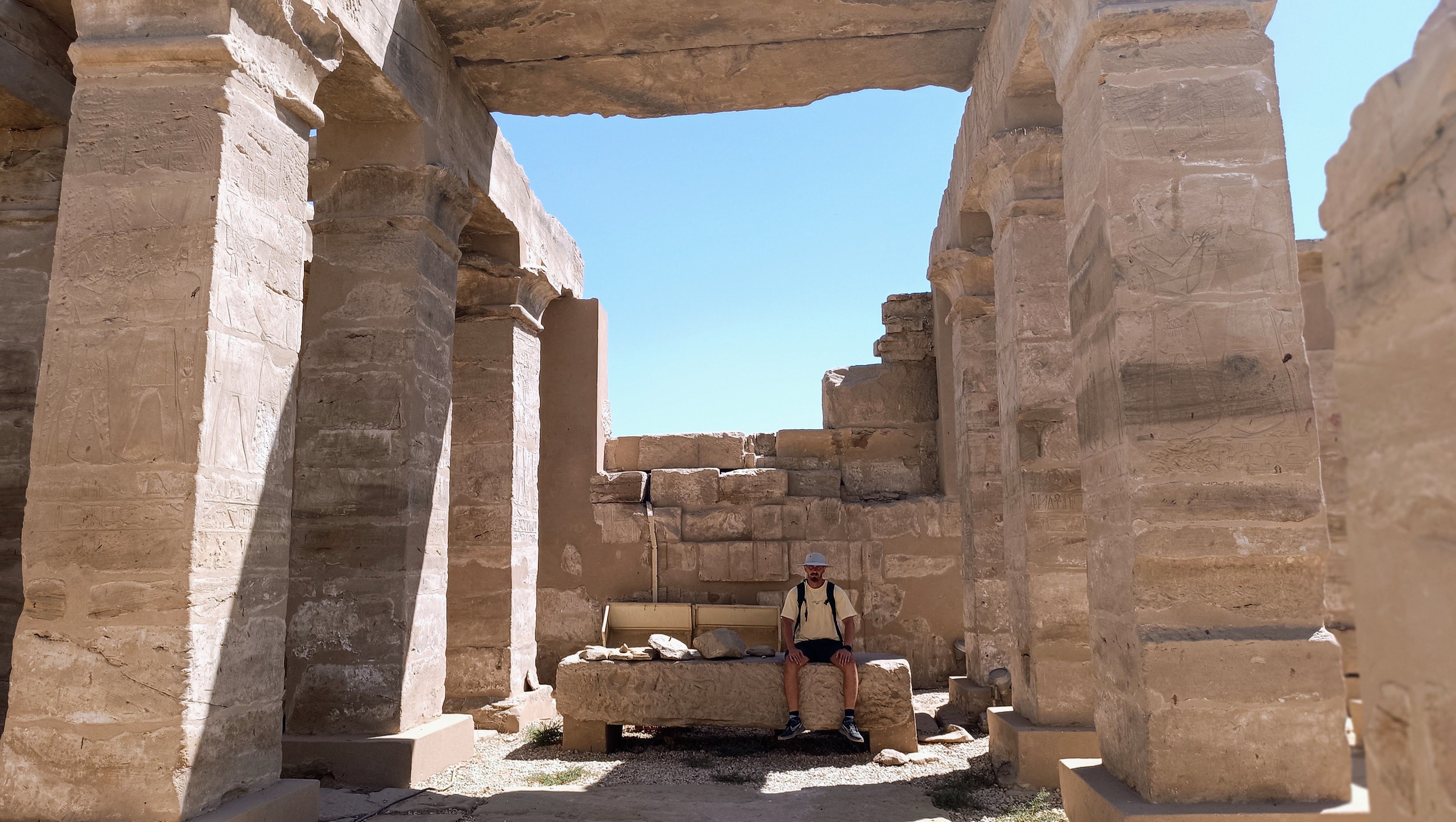
The Ramesseum is more than its fallen colossus. Its walls carry the great set-pieces of Ramesses' reign — above all the Battle of Kadesh, which he lost and then spent decades carving as a glorious victory across half of Egypt. Your Egyptologist reads it for you: the propaganda, the artistry, the sheer ambition of a man determined to outlast eternity, in a temple that has quietly crumbled around his boast.
He built all this to be remembered forever. He is remembered — as the man whose ruin taught the world that nothing lasts. It's the most human thing in Egypt.
The valley the crowds forget
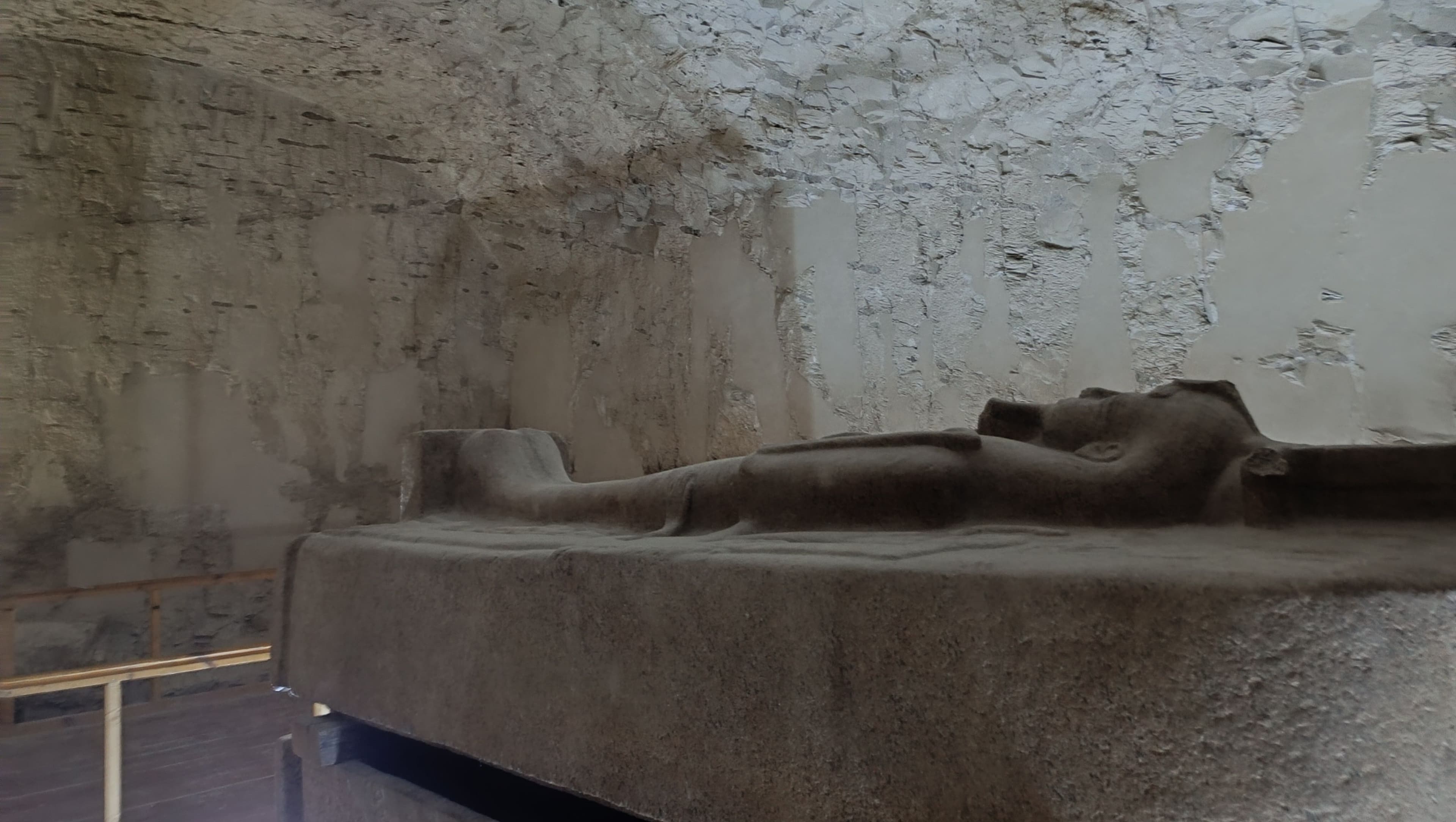
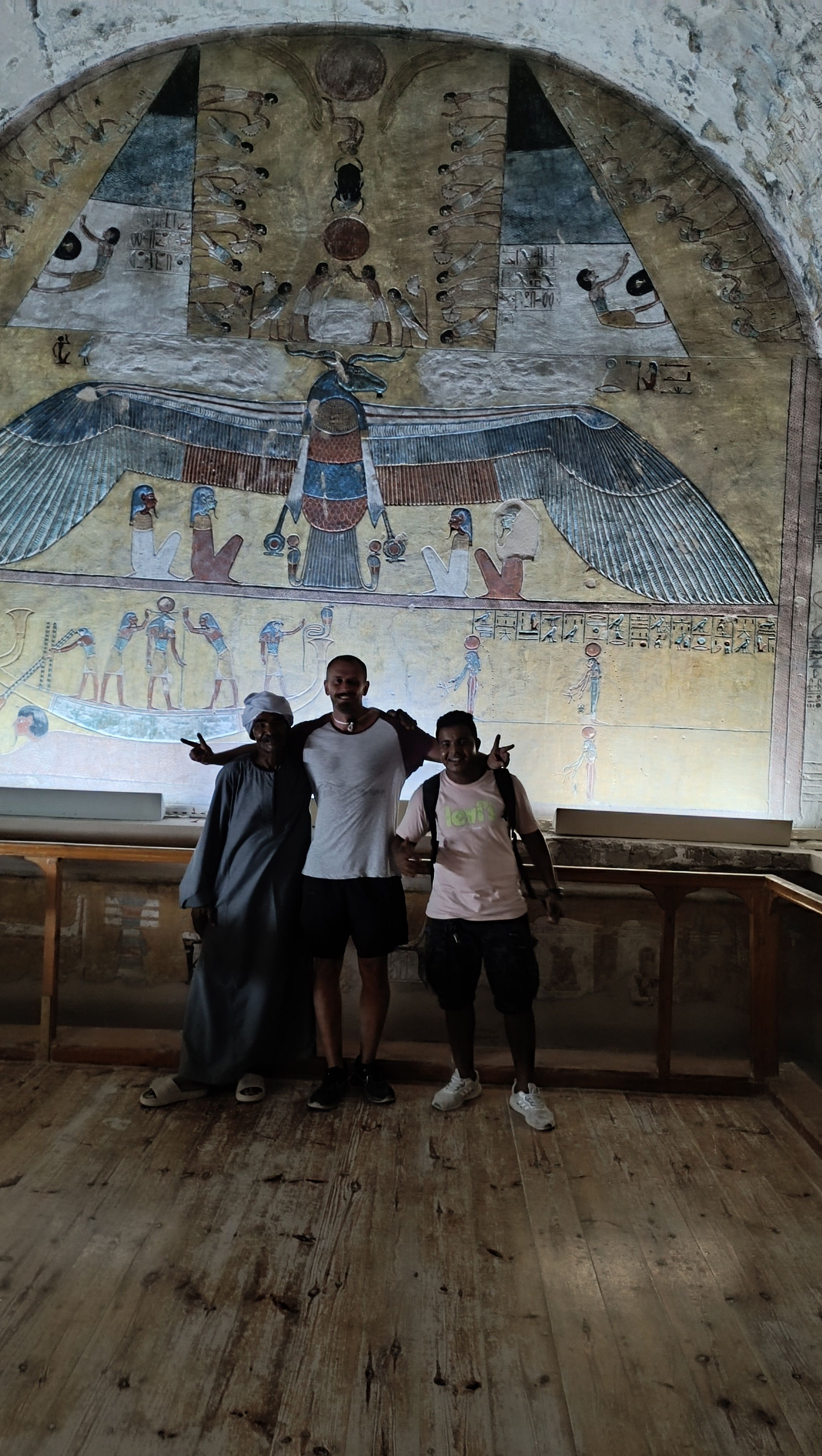
A short drive on lies the Valley of the Queens, where the wives and children of the pharaohs were laid to rest. It's quieter than the Kings' valley across the ridge, and in some ways lovelier: its tombs hold some of the most vivid, delicate painting to survive anywhere in Egypt — walls of colour so fresh they seem finished last year rather than three thousand years ago. (The most famous of them, Nefertari's, is a jewel we can arrange specially.)
It's the connoisseur's West Bank morning — the great pharaoh's ruin and the queens' painted tombs, well-timed, uncrowded, and entirely your own. Come in the cool of the morning; we'll handle the rest.