Luxor
Luxor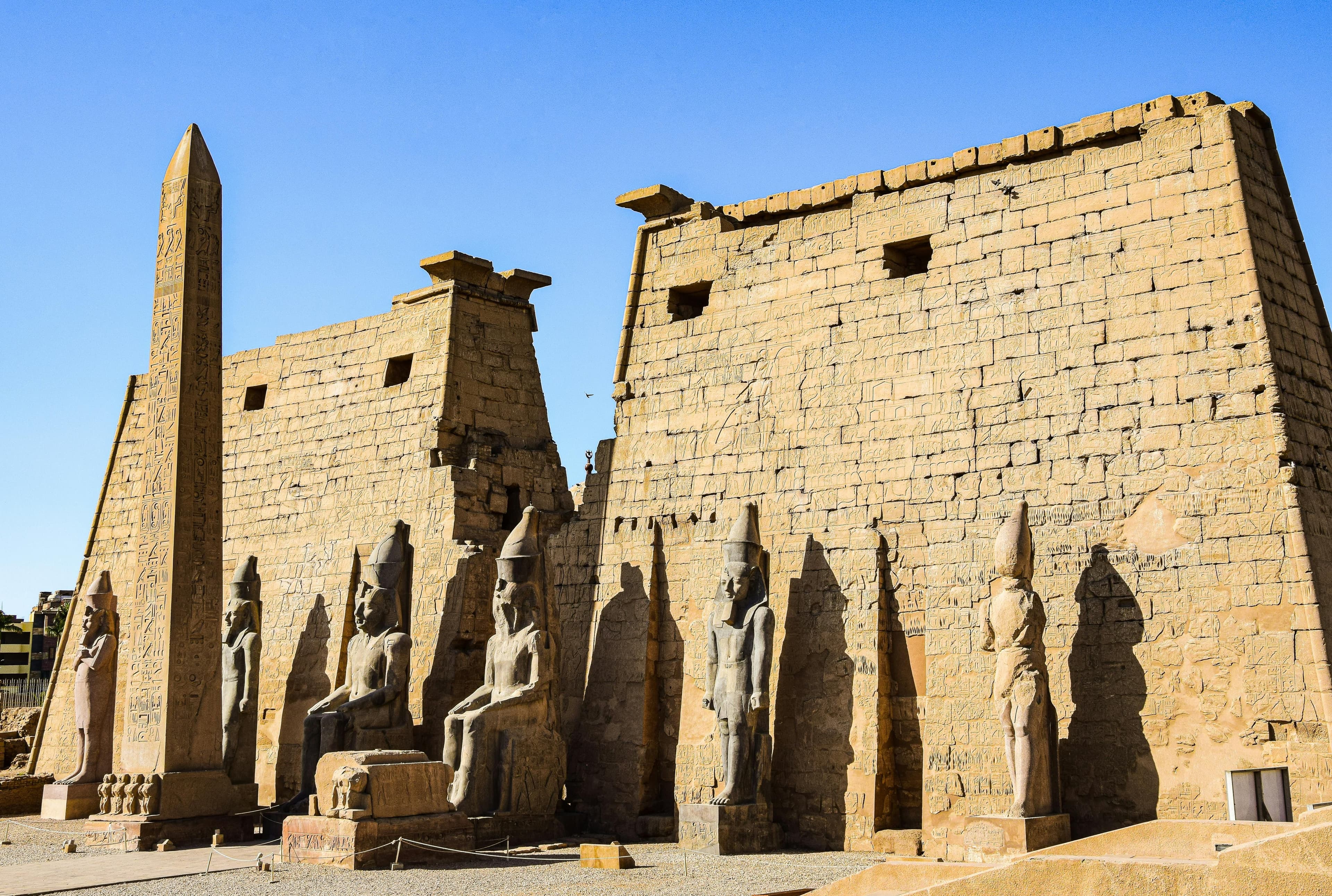
The temple that never stopped being holy.
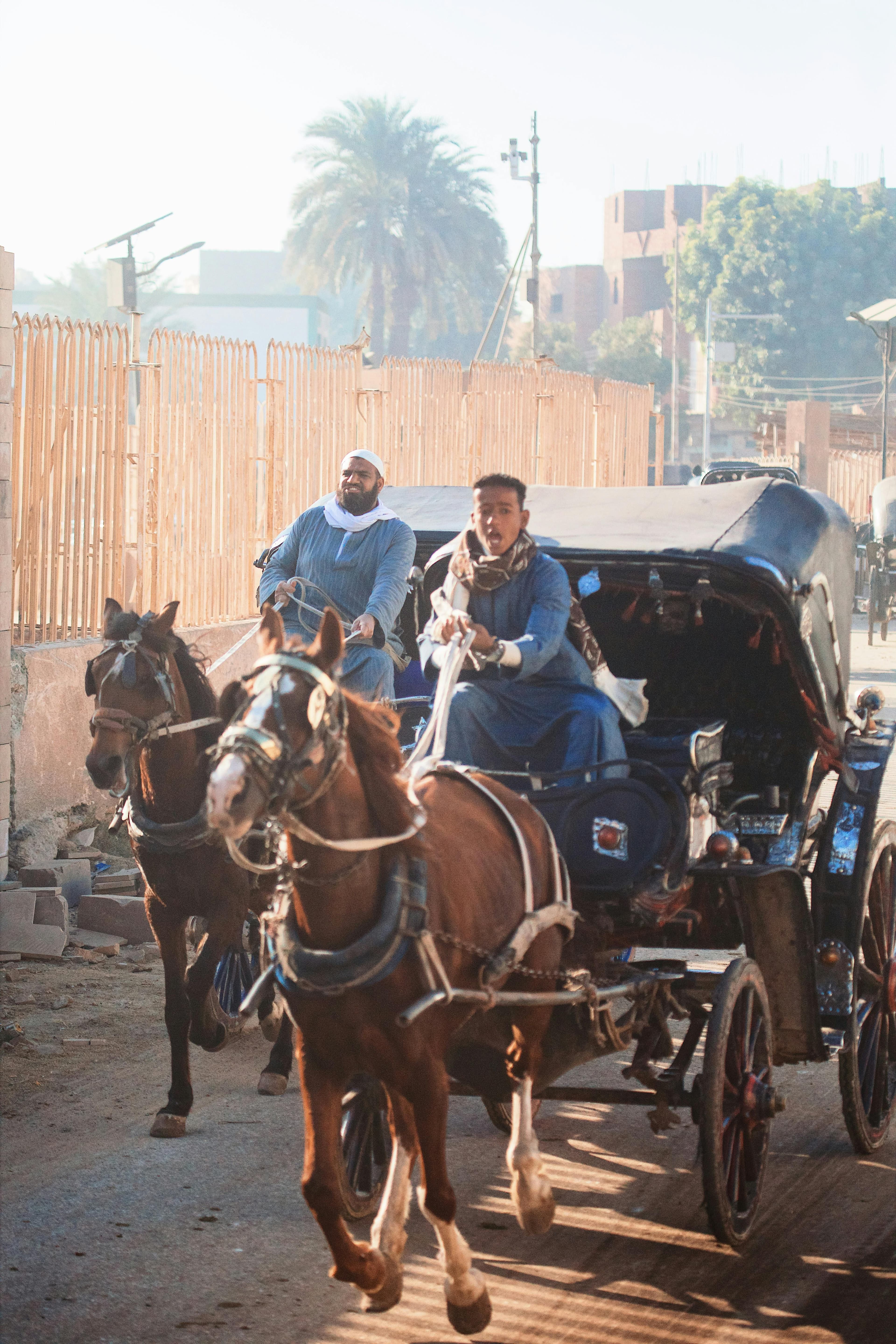
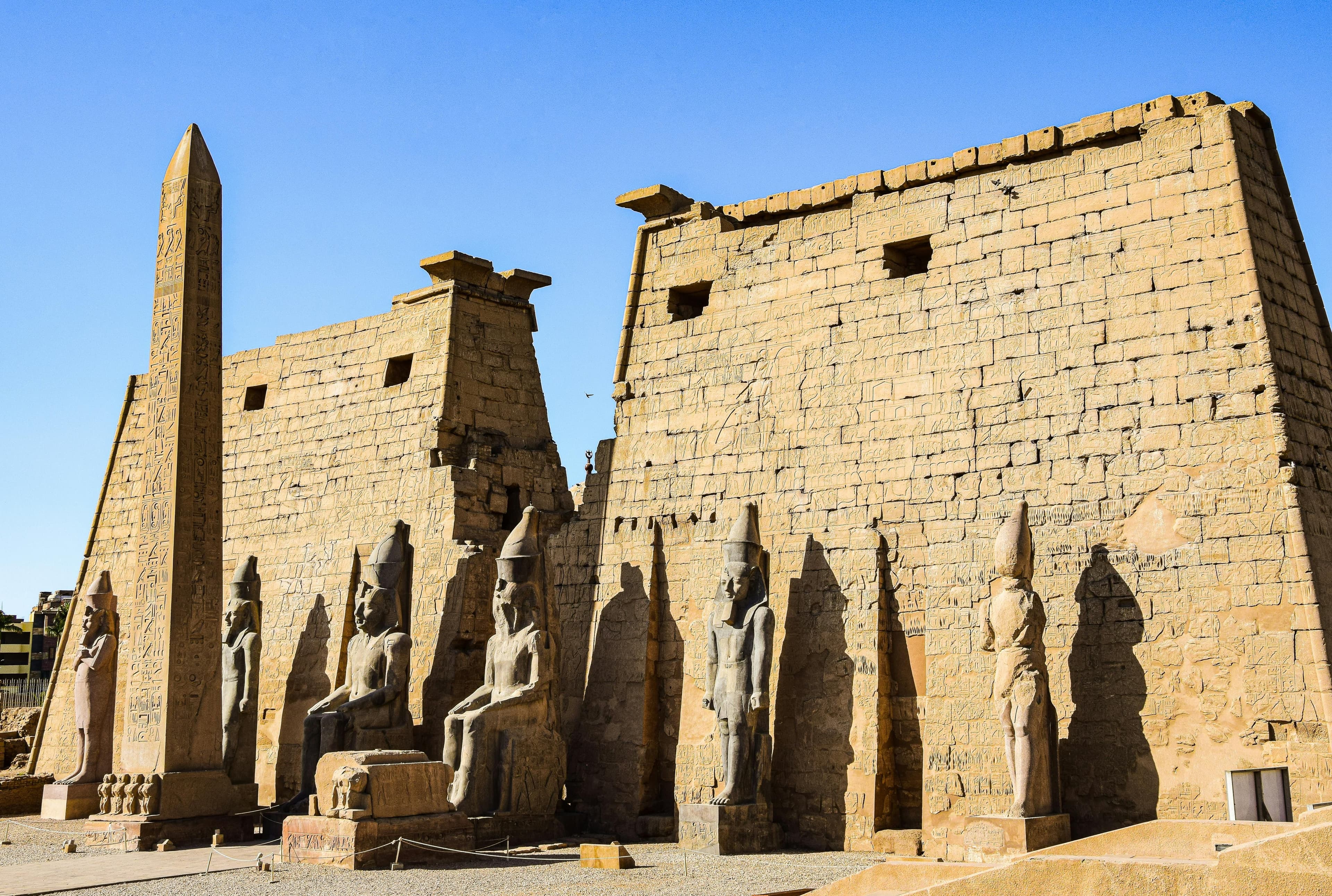
Most of Egypt's temples are ruins on the edge of town — you drive out to them, you visit, you leave. Luxor Temple is different. It sits right in the middle of the modern city, on the bank of the Nile, surrounded by the ordinary life of a working town — cafés, calèches, the evening crowd on the Corniche. And it has never, in three and a half thousand years, stopped being a place of worship.
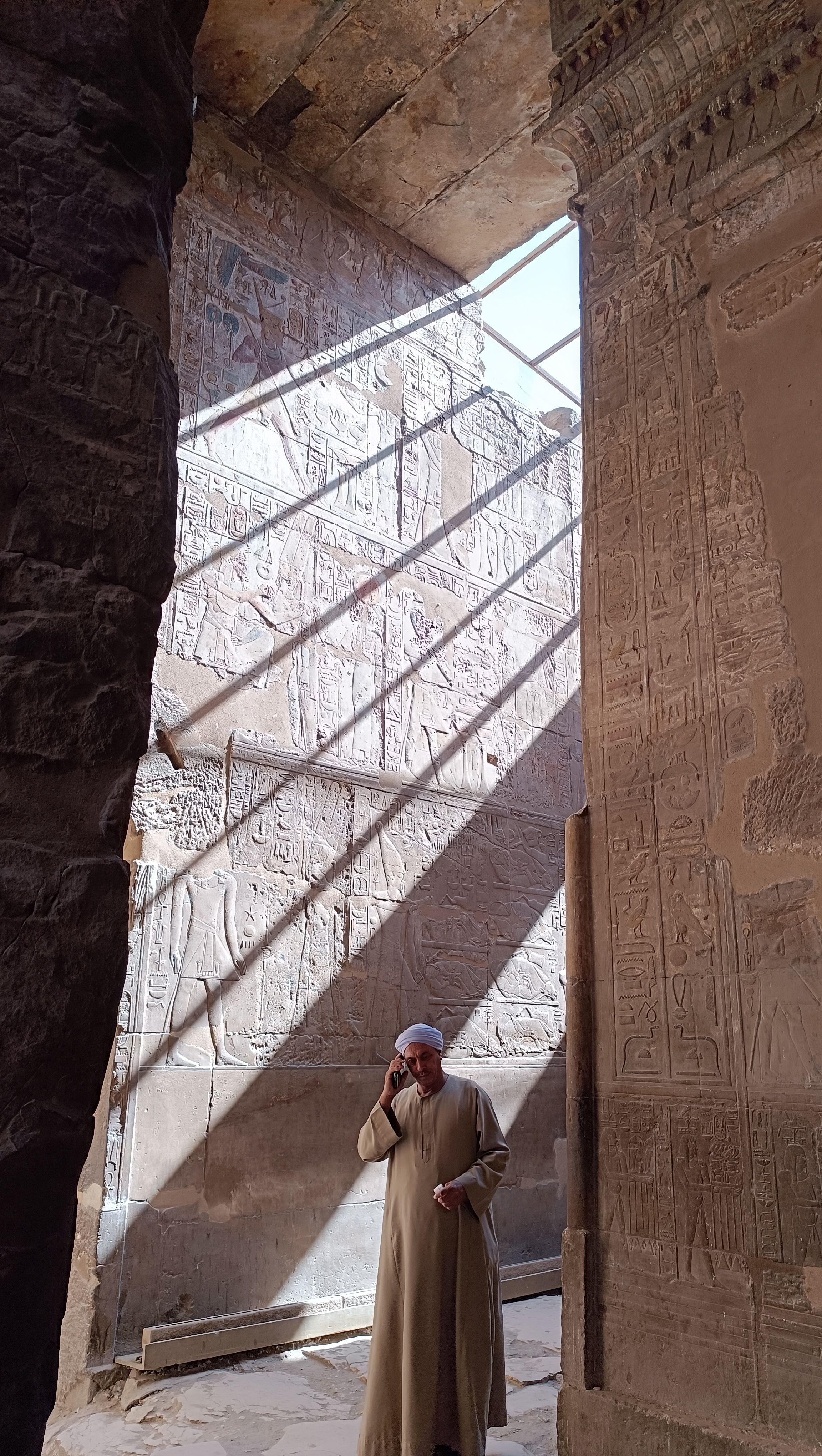
That continuity is the thing to understand here, and it's extraordinary. Pharaohs were crowned on this spot. The Romans built a shrine in it. Early Christians cut a church into its walls — you can still see the faded saints painted over the hieroglyphs. And on top of one corner, a mosque has stood for centuries and holds prayers to this day, its door now floating high above the excavated ancient floor. Four religions, three thousand years, one piece of ground, prayed on without a break.
Smaller than Karnak, and lovelier
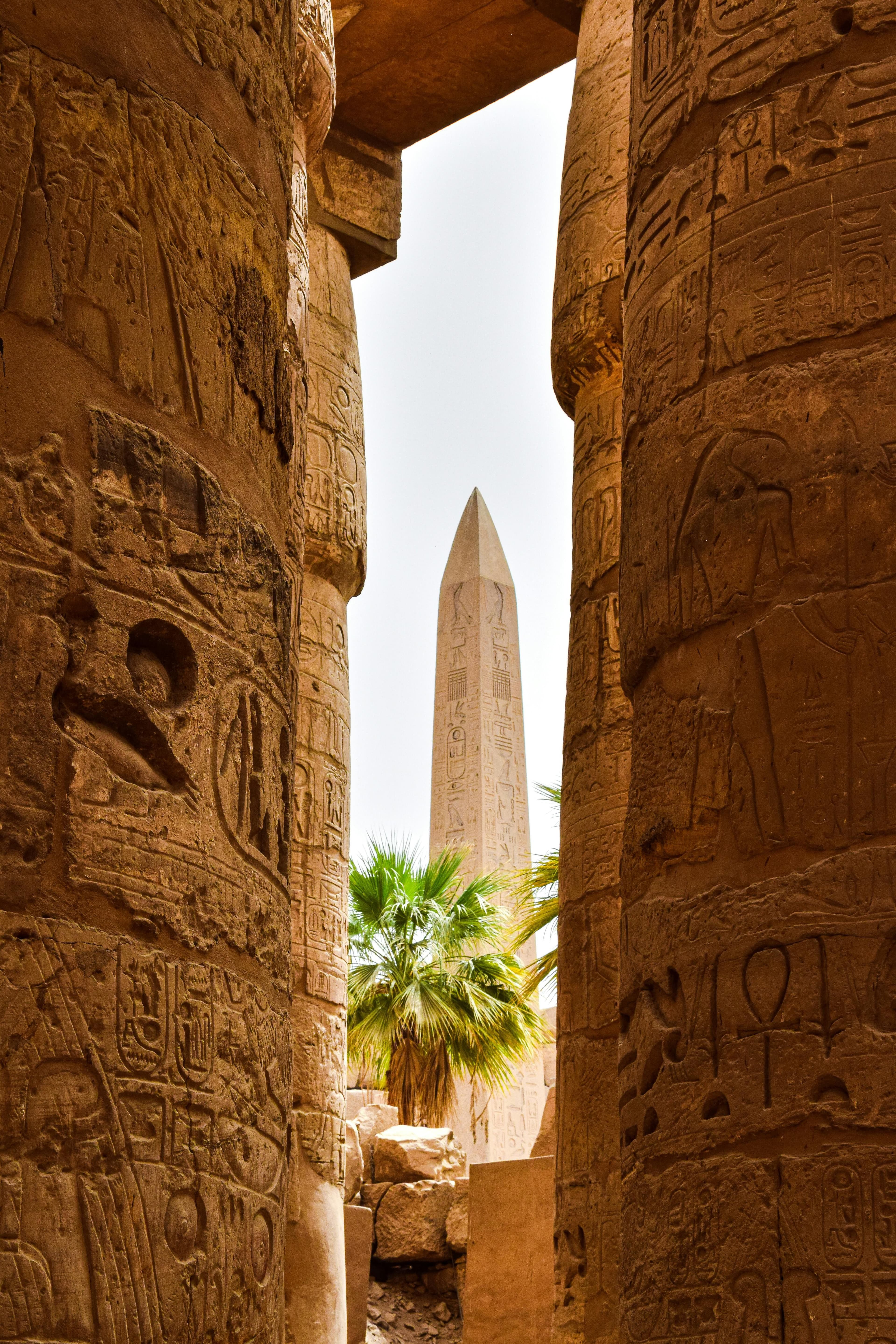
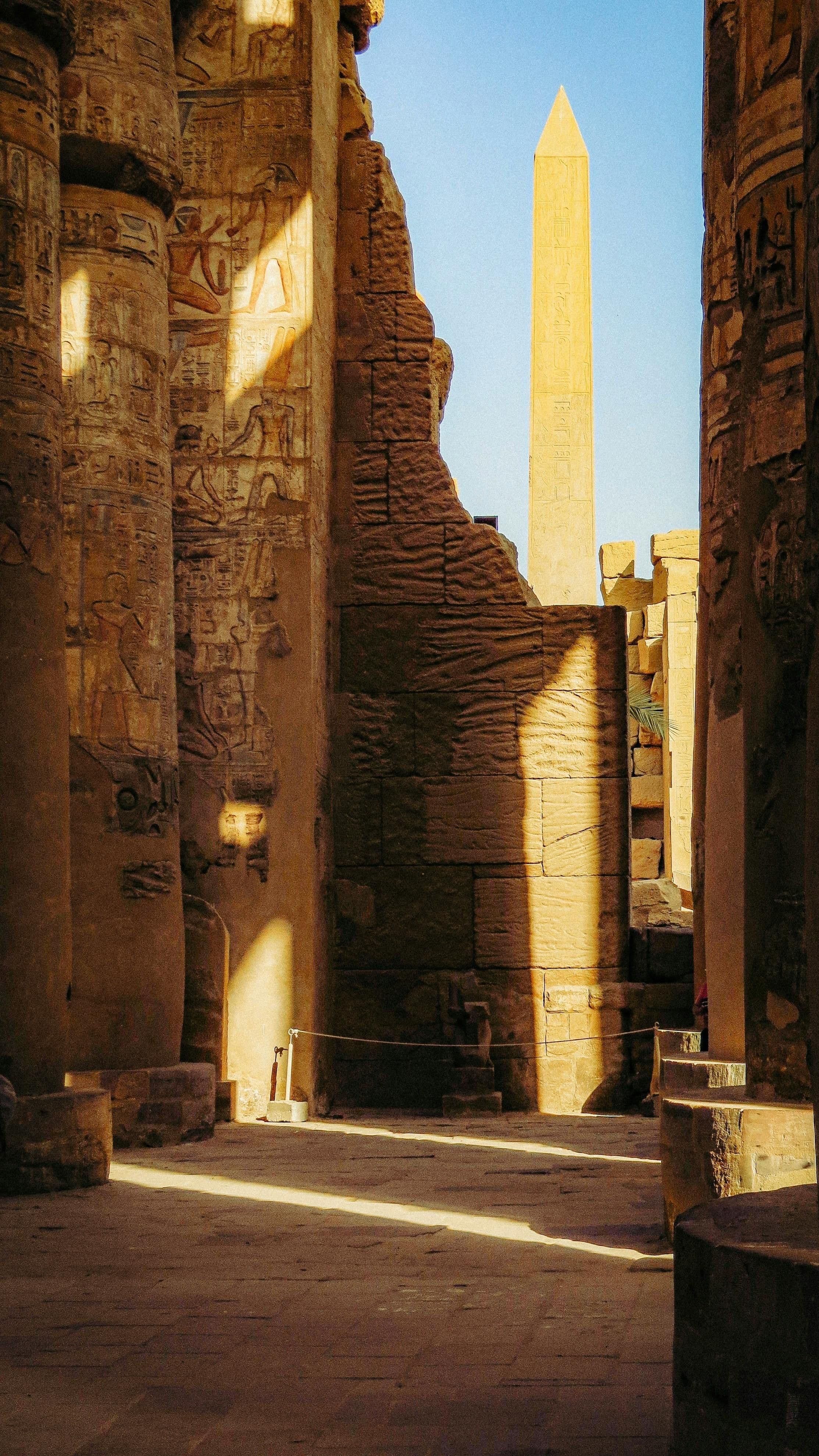
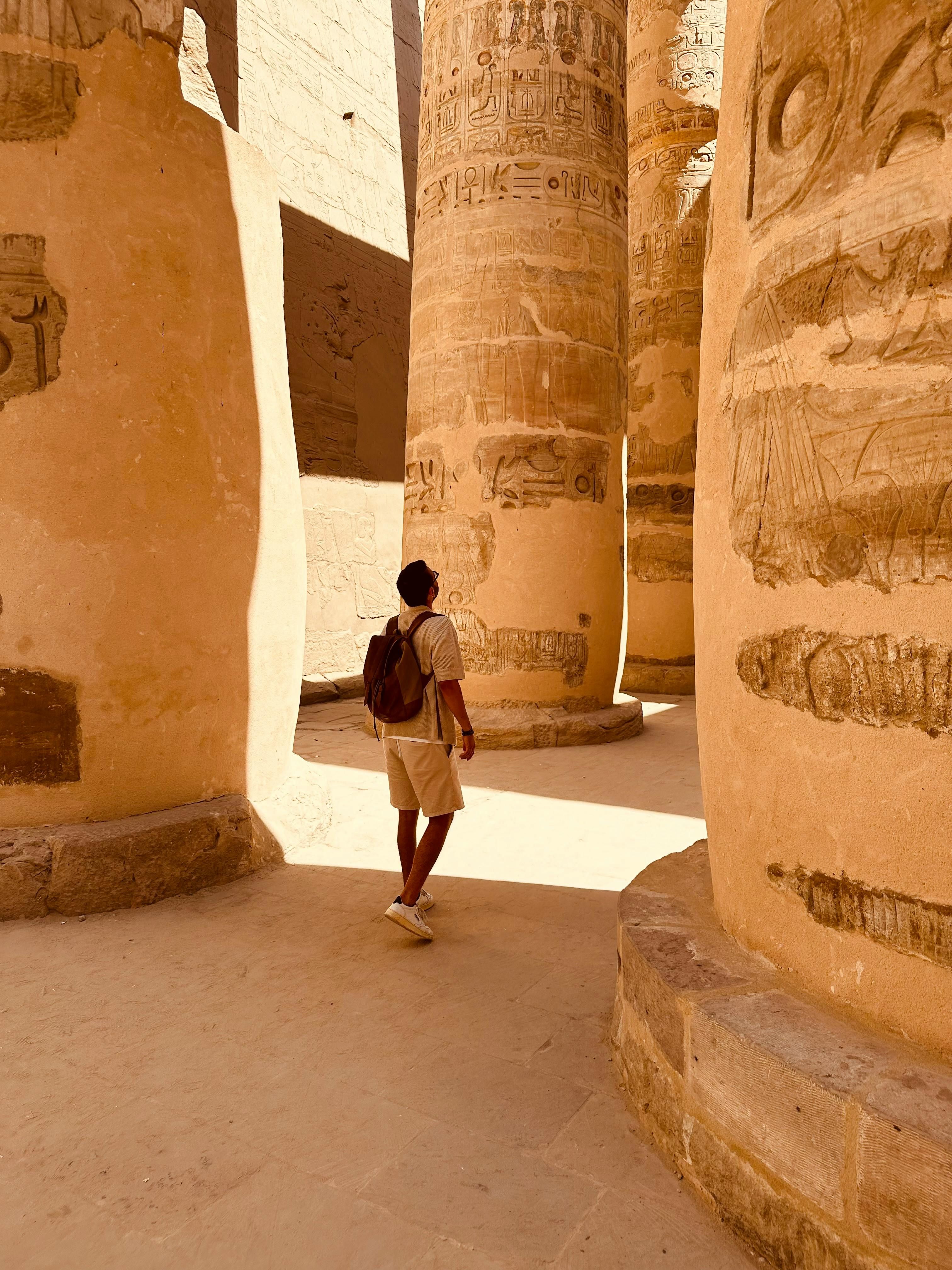
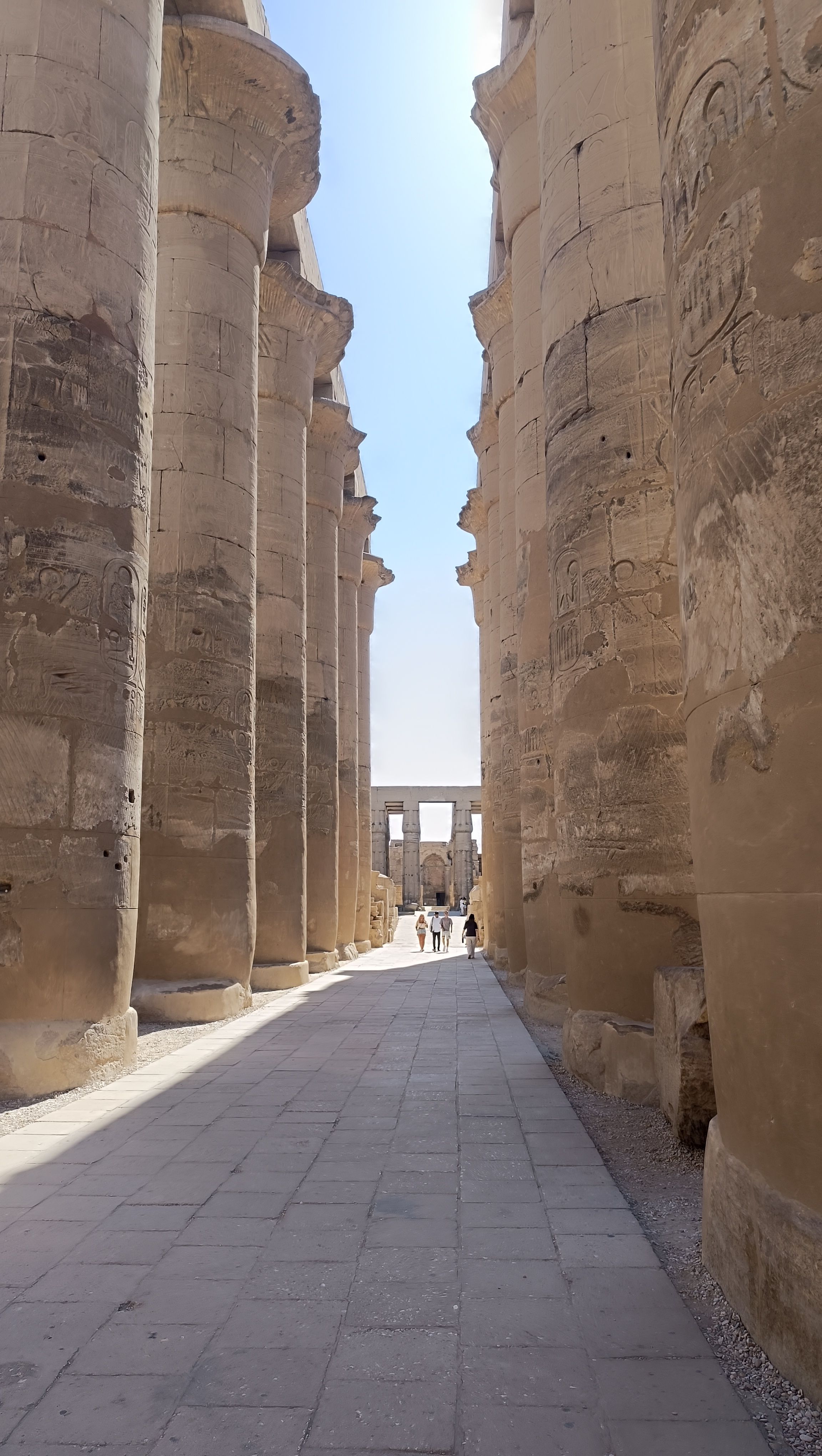
Karnak overwhelms you with scale; Luxor Temple wins you over with grace. The great colonnade of Amenhotep III — seven pairs of enormous columns with papyrus capitals — is one of the most elegant things the ancient world built, and the courts behind it are human-sized in a way Karnak never is. Many visitors, asked which of the two they preferred, are surprised to find themselves saying this one.
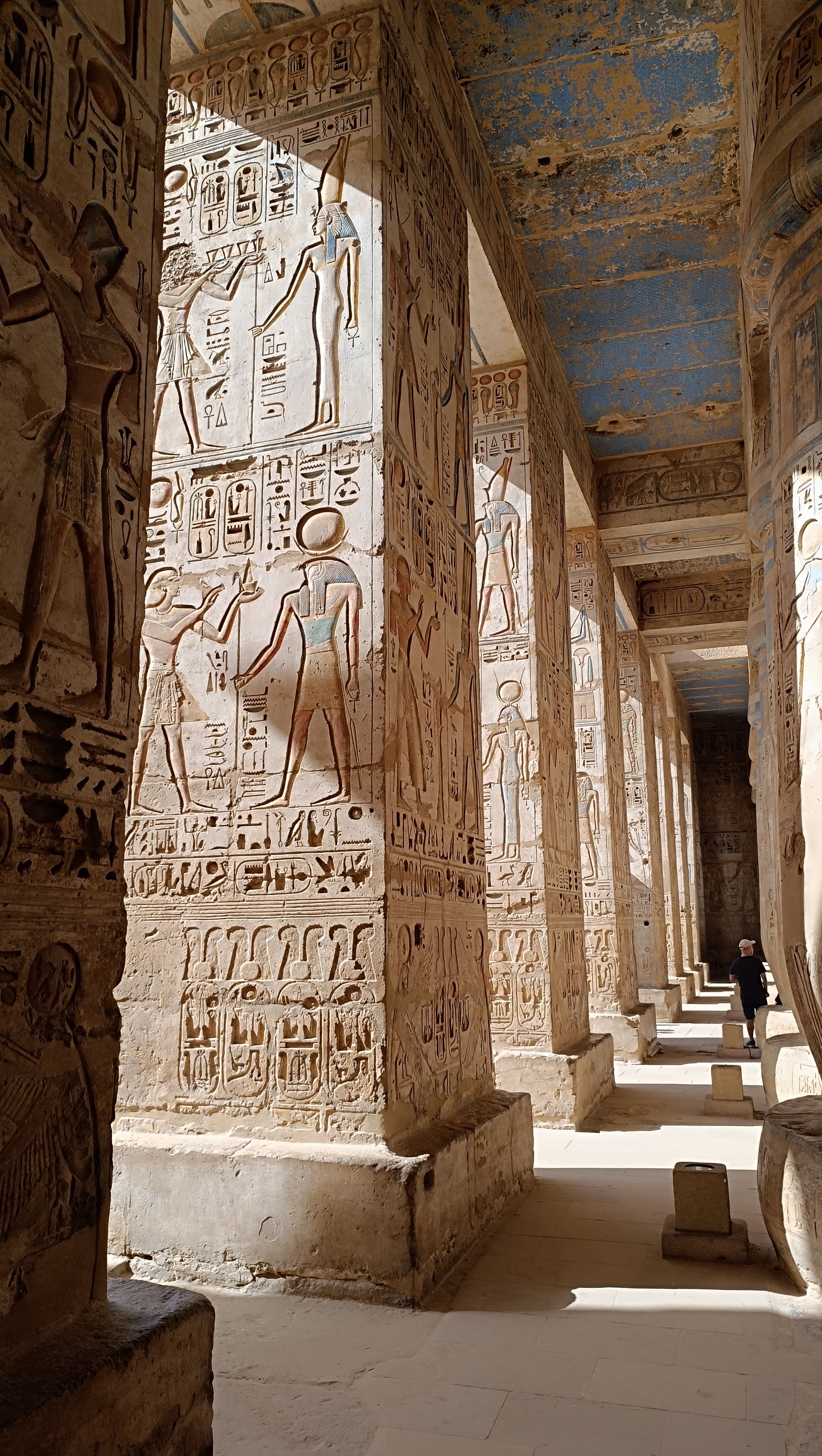
Your Egyptologist walks you through the layers — pharaonic, Roman, Christian, Islamic — and shows you how to read a building that four civilisations each made their own.
Every empire that ever held this valley left its prayer on this stone, and then left. The stone is still here, and still holy.
The heart of the evening city
There's a reason this is the temple to save for the end of the day. As the afternoon light turns the stone to honey, or when it's floodlit against the night with the city humming around it, Luxor Temple stops being a monument you visit and becomes what it has always been — the beating heart of a living city on the oldest river there is. Walk part of the Avenue of the Sphinxes toward Karnak in the low light, and you're following the exact route the gods were carried each year.
Come in the golden hour, or after dark. Either way, we'll time it so you meet the temple at its most beautiful.