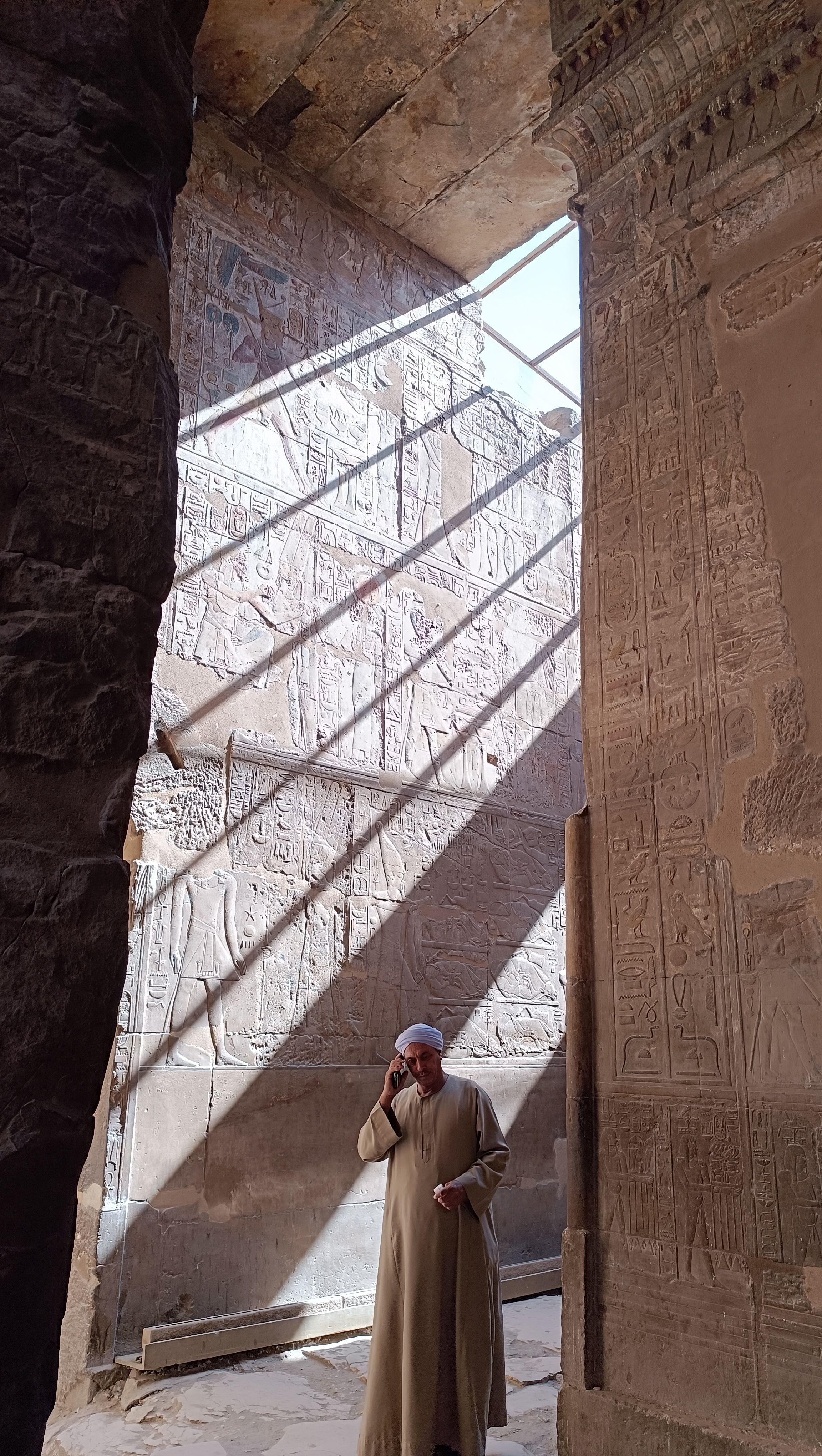
Luxor
Luxor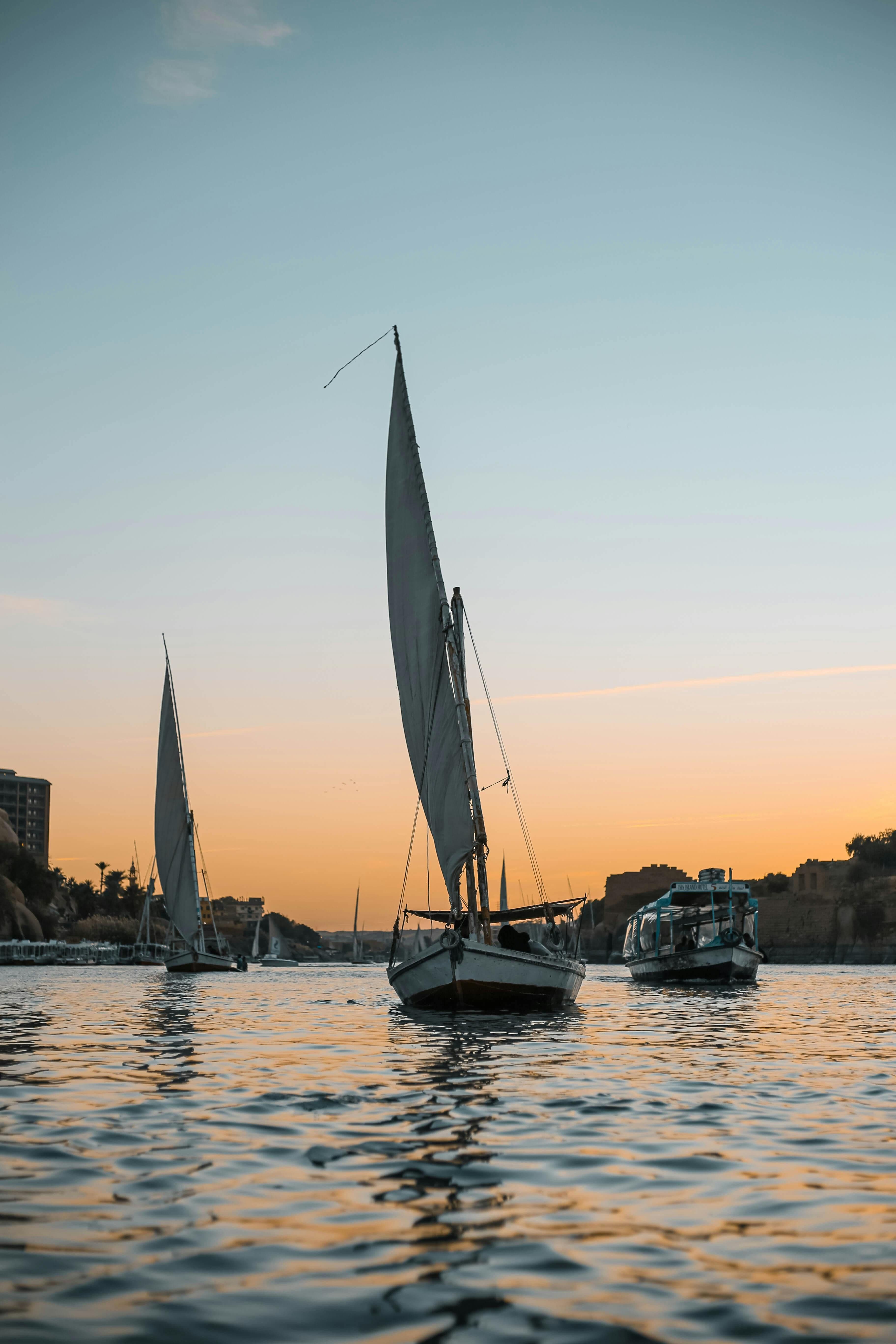
The one hour in Egypt with nothing to do.
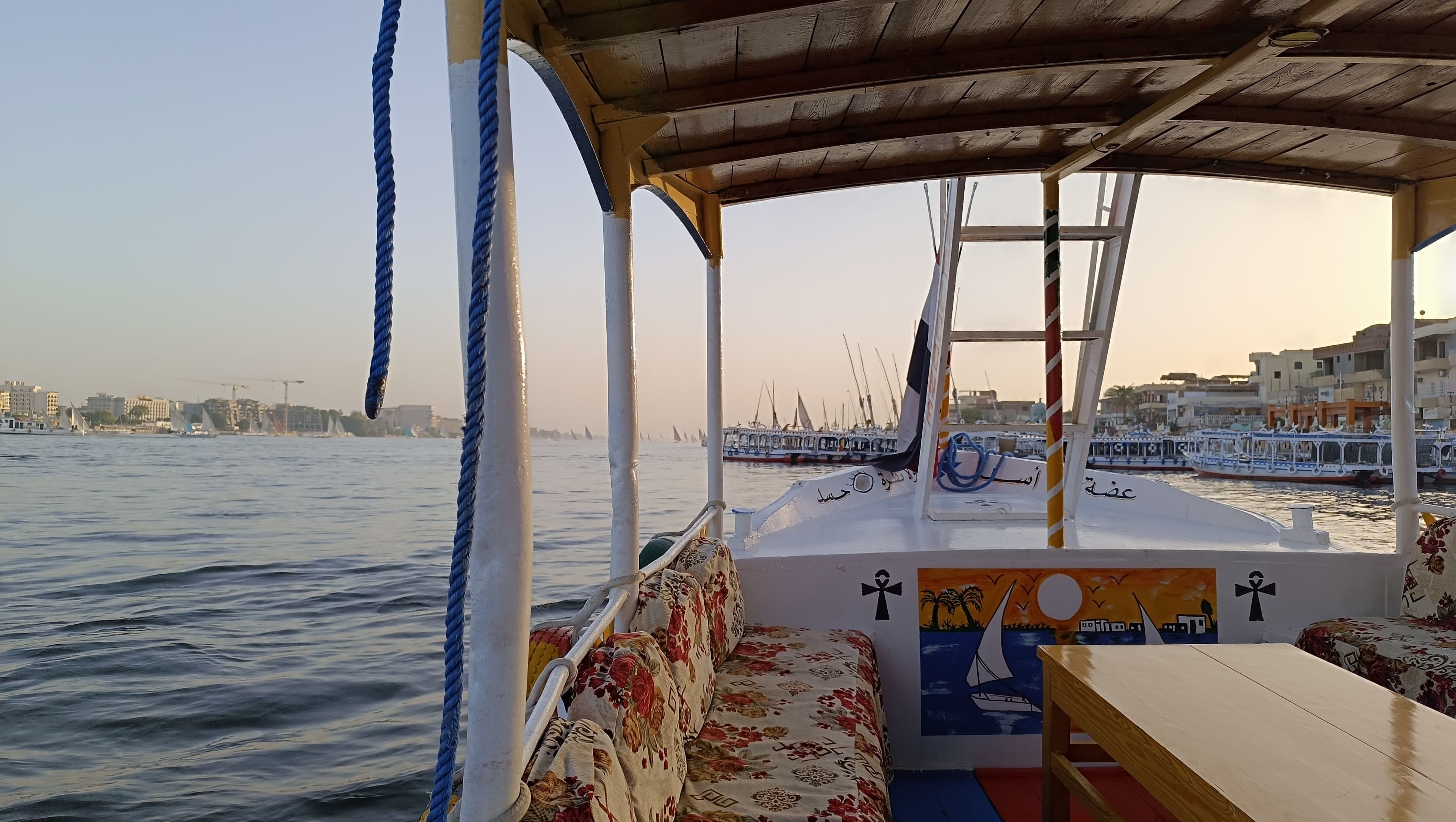
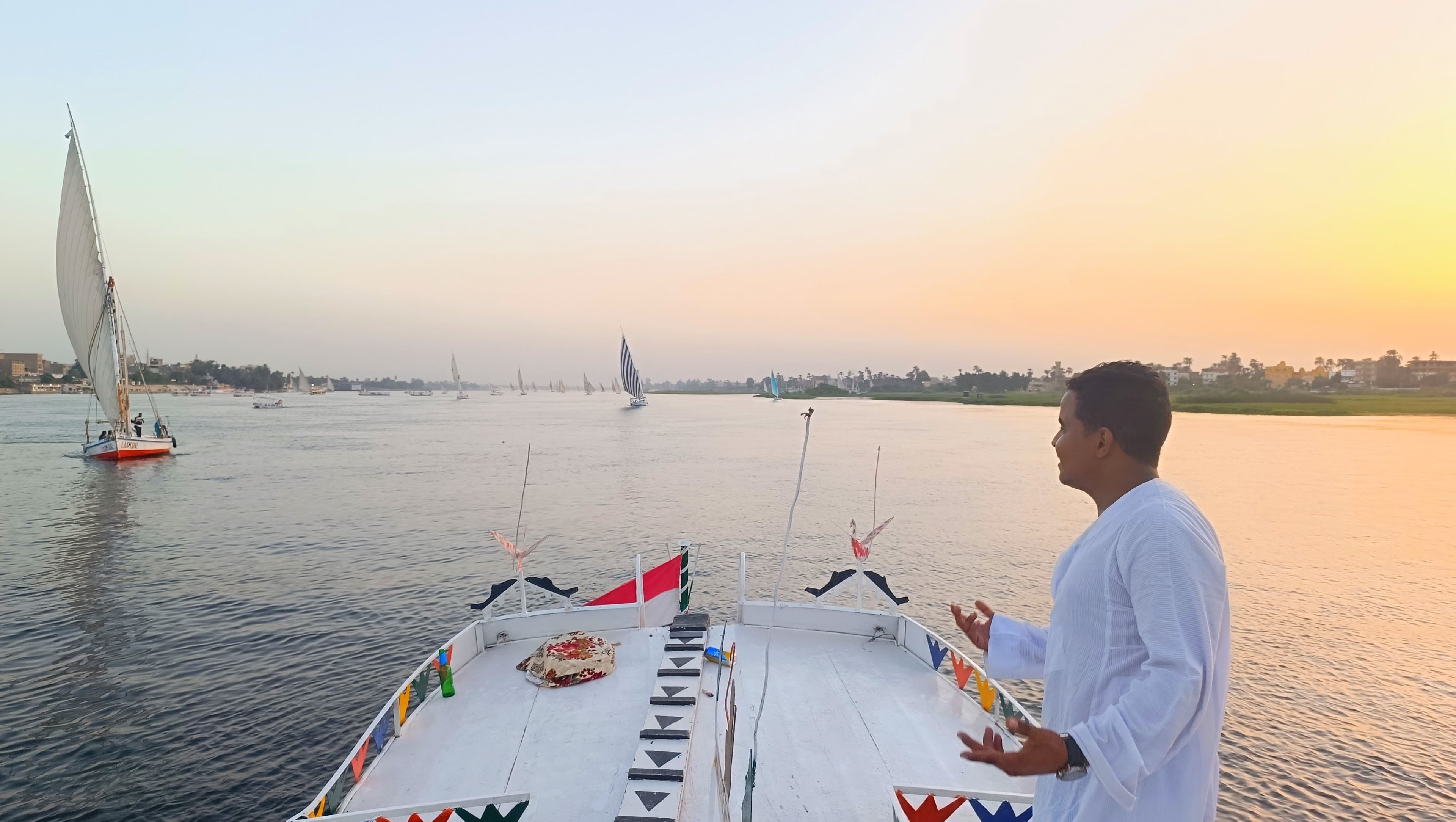
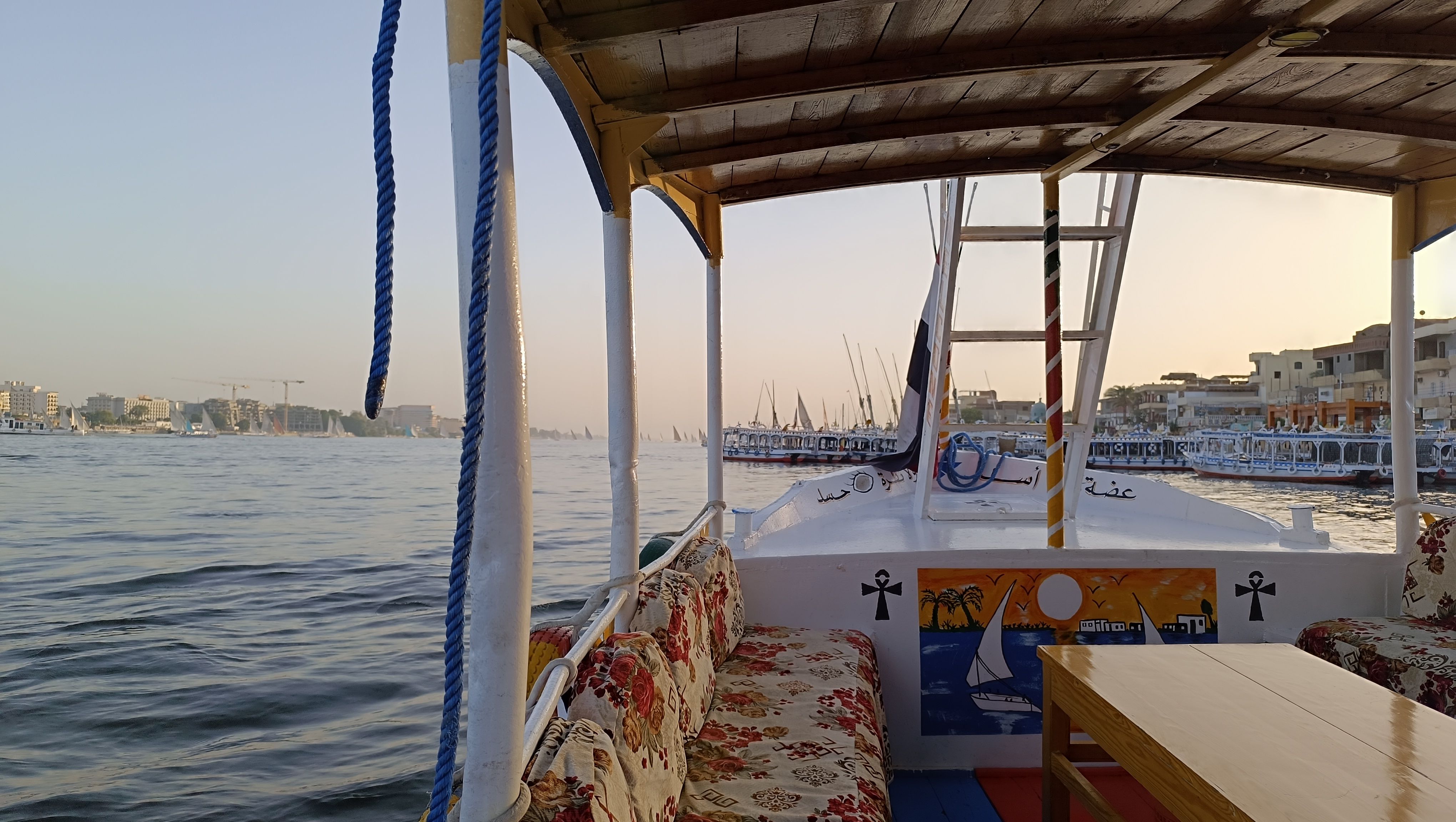
Egypt is a lot. Temples that demand your attention, tombs that ask to be understood, a sun that has an opinion about everything. And then, at the right hour, you step onto a wooden boat with a single white sail, the captain leans on the tiller, the bank slides away — and for the first time all trip, there is genuinely nothing to do.
That is the point of the felucca. Not the sights, though they're there. The rest.
The oldest machine still working
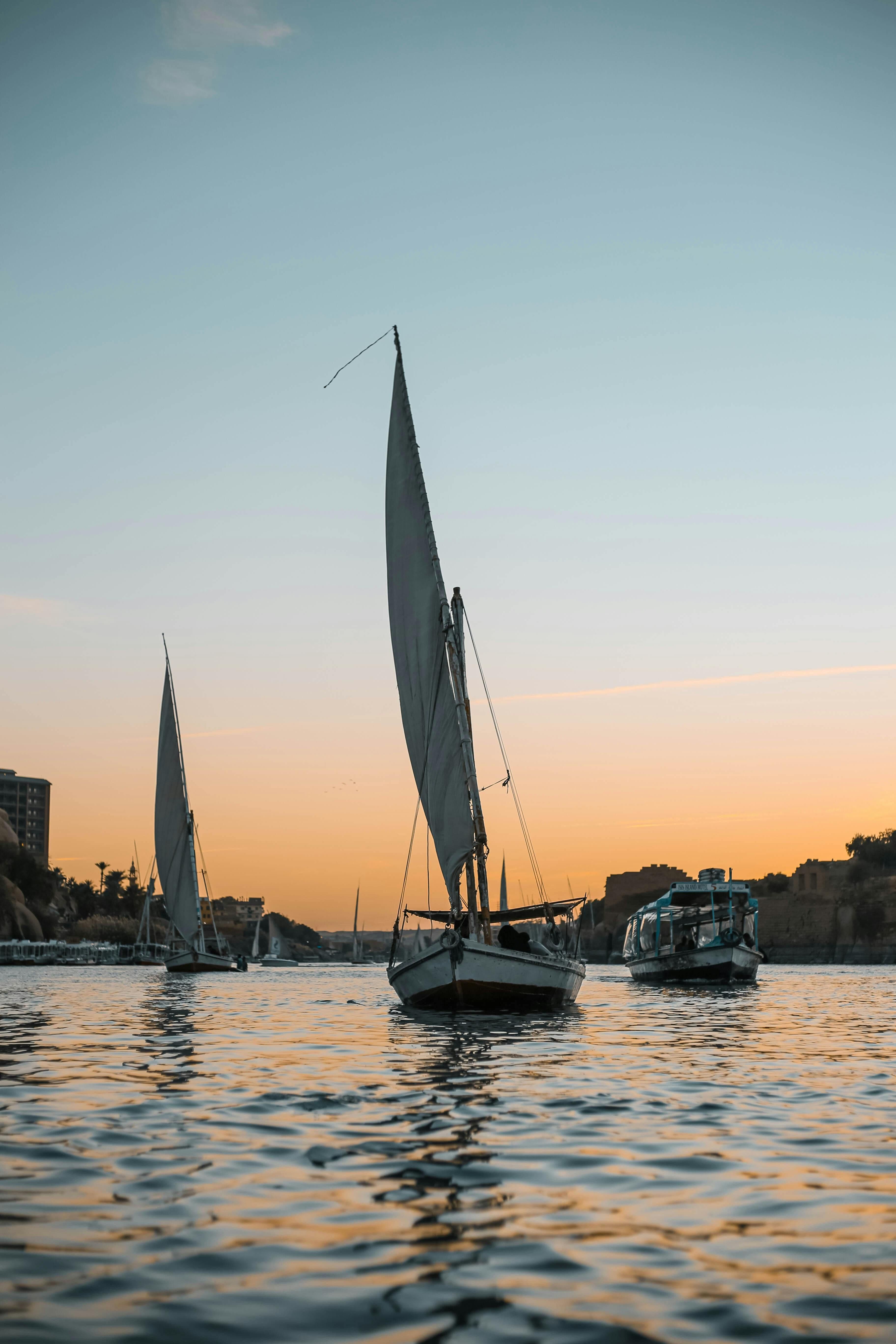
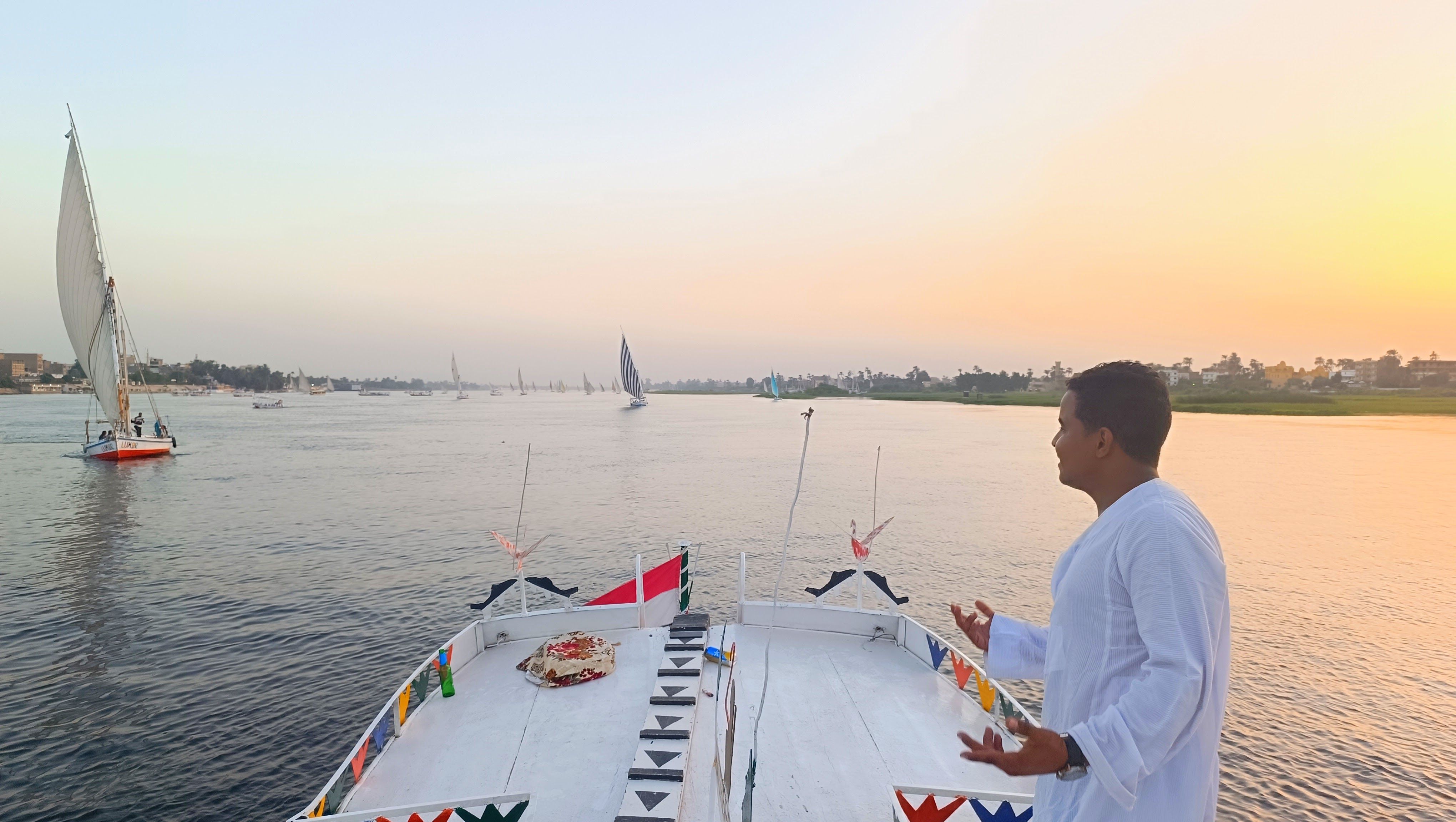
Strip a felucca back and there is almost nothing to it: a hull, a mast, a triangle of canvas, and a person who has read this river his whole life. It is essentially the same boat that has carried grain and stone and people up and down the Nile for five thousand years — no engine, no noise, no fuss. The wind does the work. The current does the rest.
There is something in that simplicity that resets you. The great temples were built to make you feel small before eternity. The felucca does the opposite: it makes you feel, for an hour, exactly the right size — a person on a small boat on a very old river, going nowhere in particular, beautifully.
Five thousand years of engineering, and the best part is still the silence.
The gold, and then the dusk
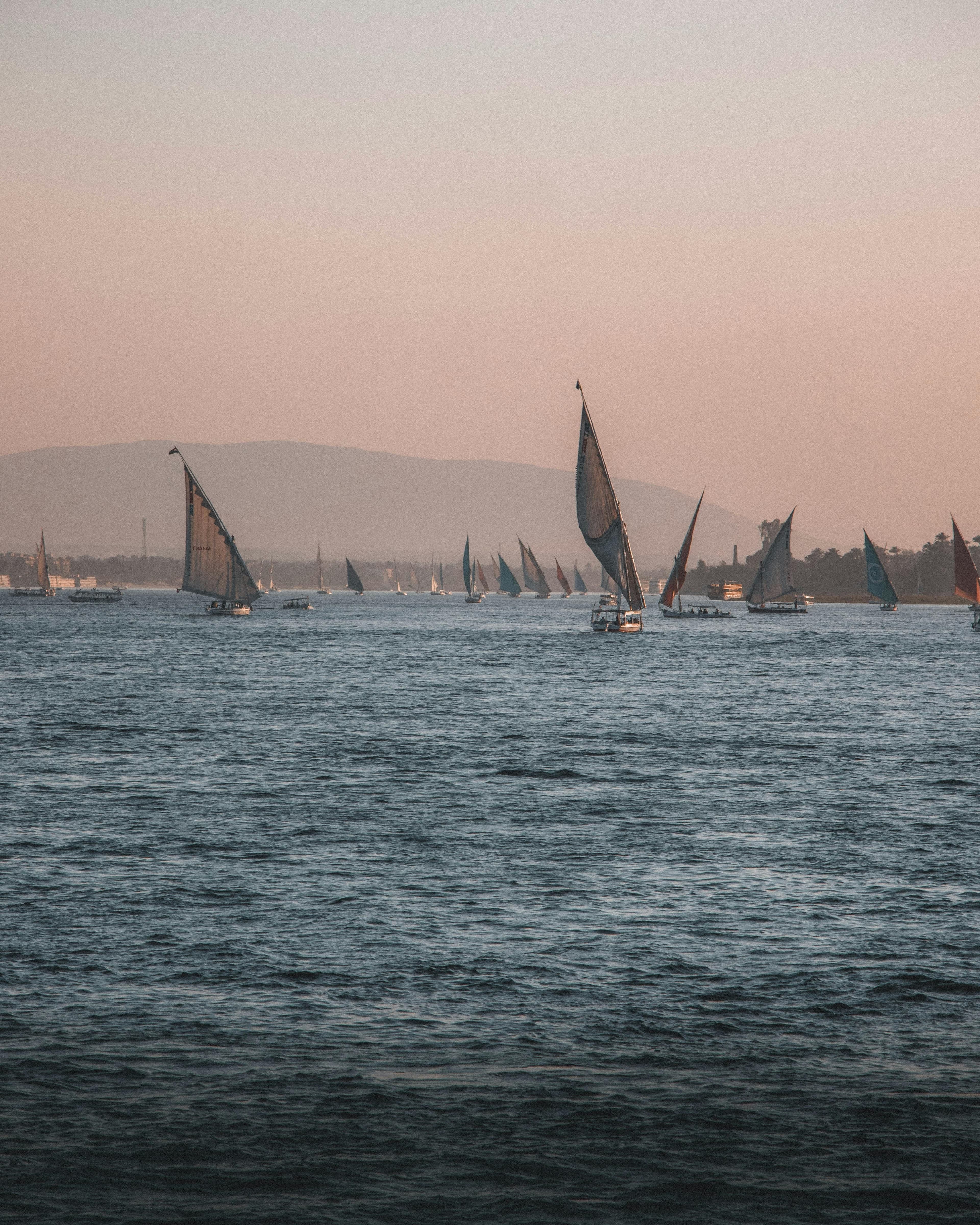
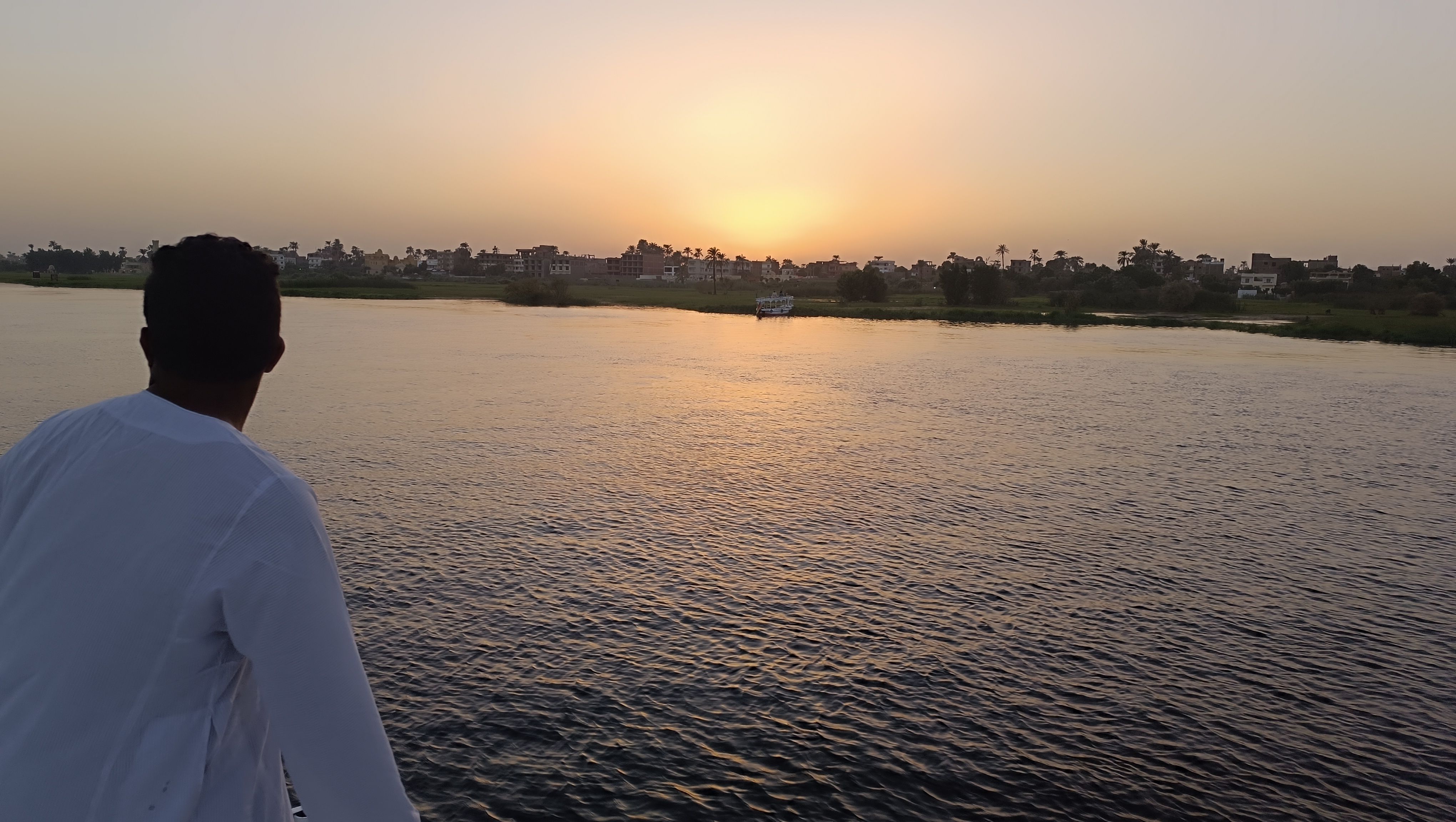
We put you on the water for the golden hour on purpose. The sun drops toward the western hills — the same hills that hold the tombs of the kings — and the river lights up from beneath, the sails around you glowing, the temples on the East Bank catching the last of it. The tea is poured. Nobody talks much. And then the gold slides into blue, the first lights come on along the Corniche, and you drift back in.
It is the softest hour in Egypt, and the one guests are most surprised to find they loved. Bring it to the end of a long day, or an evening that matters — and let the river do what it has always done.